I just started with a 2-year Postdoc with Iain Couzin at the Max Planck Institute for Ornithology in Radolfzell and at the University of Konstanz, Germany. Very excited about the years to come and be part of the brand new and booming Department of Collective Behaviour!
Category: News
-
New paper on how social conditions affect boldness repeatability
Our latest paper Recent social conditions affect boldness repeatability in individual sticklebacks, is now out online in Animal Behaviour (Open Access!). You can download the pdf here.
-

PhD completed!
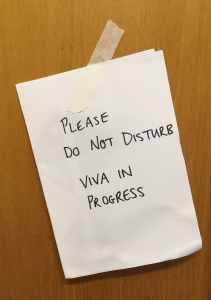
With my Viva behind me I have officially completed my PhD! Feels great to be Dr JW Jolles!


-
Guest Lecture, Bangor University
I was invited to give a guest lecture for a third year module at Bangor University. Was great discussing research ideas with Katherine Jones, visiting the University and fish labs, and walking through the Llanberis pass on my way back!
-
Handed in my PhD thesis
After three years I have completed my PhD thesis and just handed it in! It feels strange to finally have the product in my hands of so much work over the years.
-
Paper accepted in JFB on personality and foraging in sticklebacks
Paper accepted in Journal of Fish Biology on personality and foraging in sticklebacks!
-
Paper accepted in Animal Behaviour about boldness repeatability
Our paper “Recent social conditions affect boldness repeatability in individual sticklebacks” shows that recent experience of a social group had carry-over effects and reduced behavioural repeatability when individuals were alone and that two days of social isolation improved boldness repeatability of individual sticklebacks.
-
Paper accepted in Royal Society Open Science on sex differences in rats
My latest paper is accepted: “Risk-taking and associative learning in rats”, in the open-access journal Royal Society Open Science. We show that males and females differ in how they cope with risk, with males being more risk-prone and behave more in line with previous experiences, while females are more risk-averse and responsive to changes in their current environment.
-
Awarded post-doctoral Research Grant from ASAB
My application for an ASAB Research Grant was successful, meaning I will be able to do an exciting post-doc project in the new year back in Cambridge invesigating the effects of personality and group size in schooling sticklebacks!
-
Four manuscripts on the go
I haven’t posted for a while but have been busy writing up my thesis, and have four papers submitted, under review, under revision at the moment (see publications) and more to come! I aim to hand in my thesis by the end of November.
-
Invited talk at Collective Behaviour Symposium, Max Planck Institute
I spent three days visiting Iain Couzin and his new Department of Collective Behaviour at the Max Planck Institute, Konstanz, which today culminated in a symposium on collective behaviour at which I gave a talk on personality and collective behaviour. What an amazing place and such a great day!
-
Received Clare College Thirkill Prize
I was awarded the Thirkill Prize for my contributions to college life. I fulfilled the position of Graduate Research Officer, set-up a brand new umbrella organisation called “Clarity” with the aim to increase the interdisciplinary discussion at Clare, and organised the yearly Clare Research Symposium, which was a great succes. Read more about it here.
-

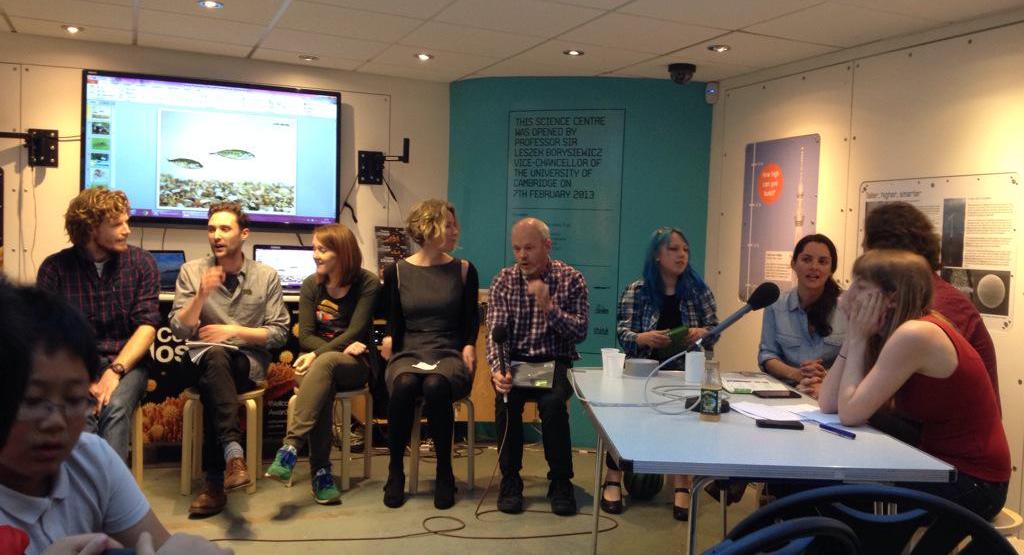
Live with my sticklebacks on the Naked Scientists podcast

Recently I was invited to participate in the latest episode of the fantastic Naked Scientists podcasts series to highlight why sticklebacks are the most incredible animal on the planet!
Colour-switching sticklebacks, geckos with enough adhesive power to hold up a human, bats with built-in sonar and moles with amazing noses – this week we go in search of the world’s most incredible animals. Scientists passionate about their species put their cases to our panel. But which animal will be crowned king?
To make clear to the radio audience why sticklebacks, perhaps ordinary looking fish to most, are actually an amazing animal species I brought along 10 fellow stickles and made them change colour over the time of the hour long interactive show! You can listen to the full podcast here or just listen to my part here where I also discuss a range of other cool abilities of this great little fish.
The Naked Scientists show was brilliantly hosted by Ginny Smith, had some amazing other speakers including Hannah Rowland, Corina Logan, Nick Crumpton, and Jade Cawthray, and also aired on BBC Radio 5.
-

New stickleback project finished
 Two part II Zoology students of mine have just finished an exciting new project with the sticklebacks! I can’t say too much about it yet but the photo can give an idea ;-) In short, it involved large numbers of tagged three-spine sticklebacks.
 -
Stickleback spine-use project
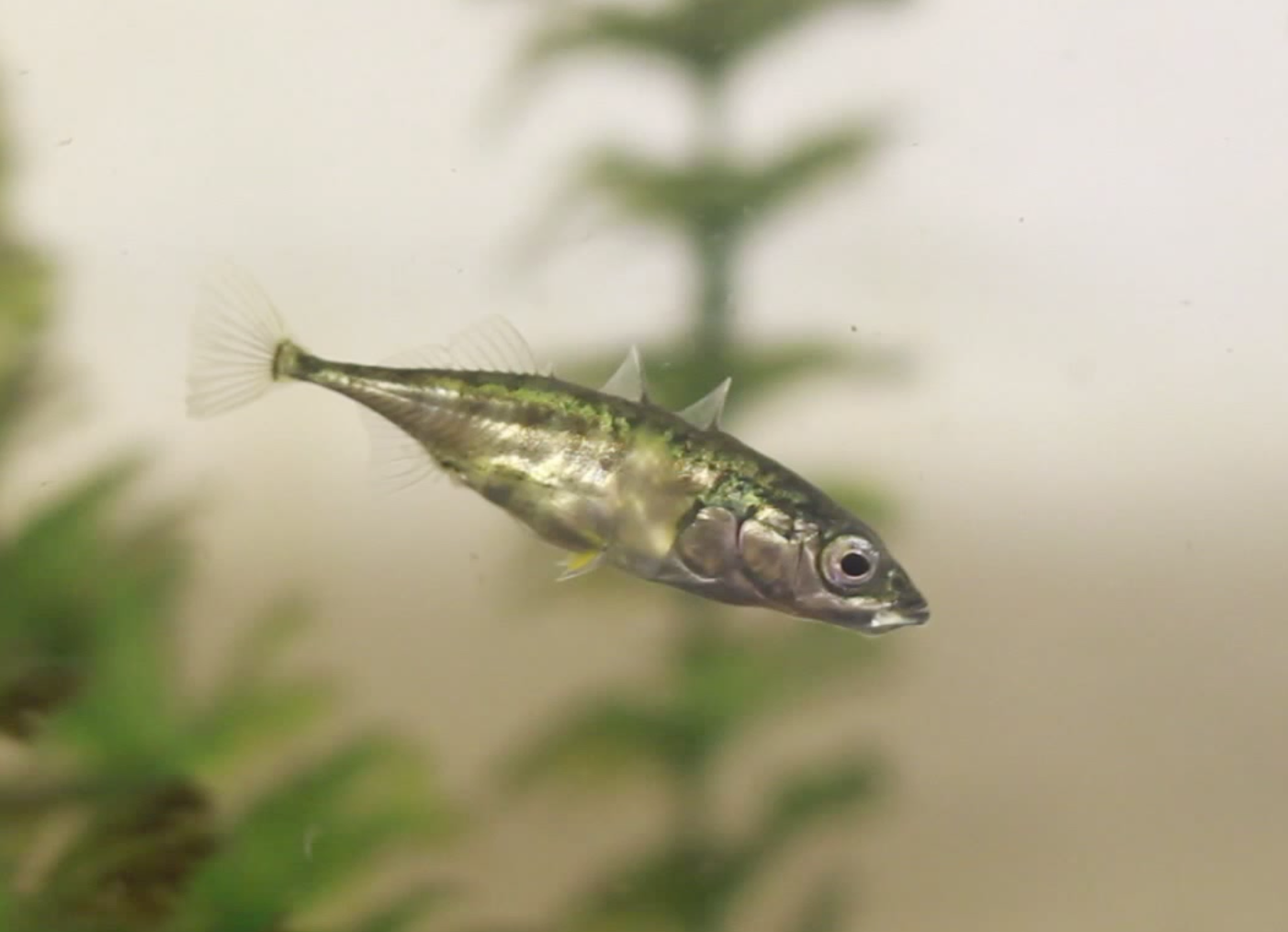
Very recently two part IB students of mine finished a nice little experiment on the spine-use of three-spine sticklebacks. We were interested to see how personality might be related to the raising of the spines of three-spine sticklebacks as it helps them in protection against predators. Watch this close-up video that I took that nicely shows one individual stickleback raising its spines and lowering them again after feeling threatened by my presence. Hopefully soon we have the manuscript out with the findings of our study!
-

Last experimental work of PhD finished!
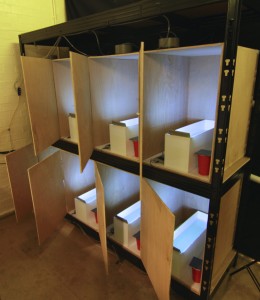 Today I finished my last experiment that will be part of my PhD! I have been locked away in the lab for a couple weeks, testing hundreds of fish on their personality and collective behaviour, but now analysis and writing can fully start. I must have tested close to a thousand fish in the two and a half year since the start of my PhD, most of which are now enjoying a happy end of their lives back in the wild. I have all the data of a number of exciting projects that will not need me to go back to the lab for at least half a year but I can actually not wait to test my next hypothesis! The three-spine stickleback is an amazing species to work with and I will definitely continue working with them after my PhD.
 -

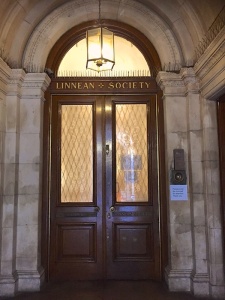
Invited lecture at the Linnean Society

Last Wednesday I gave the Student Lecture at the Linnean Society in London. It was a great honour for me to be invited to talk at this wonderful society, which is the oldest active biological Society in the world!
 My hour-long lecture was mainly aimed at students with a general biological background. I therefore made a much broader talk about my work, which is a nice change from all the conference talks the last year.
I talked about a range of things, from how I decided to be a scientists and what fascinates me in the natural world around me to why I study sticklebacks to study these questions and how to do behavioural experiments. I then discussed the various experiments I have done to investigate the role of animal personality in collective behaviour.
It was great to see so many enthusiastic students with very bright questions at the end that hopefully got inspired by my talk to become zoologists themselves. My talk should become viewable online next week so check back soon!

-
Talk at Clareity Research Symposium 2015, Cambridge
Yesterday I presented my latest research on the role of personality differences in leadership and collective movement with three-spined sticklebacks at the annual Clareity Symposium, Clare College, Cambridge.
-
Renovating my lab
 I have been locked away in my lab for most days in January/February this year for a total lab renovation to have a fully automated testing set-up that enables me to test large numbers of fish in very little time.
Now everything is in full working order I will write some more detailed blog posts about it in the near future! My first two student projects that used the new set-up worked out great and I am excited to go large scale soon!
-
Guest Lecture at Anglia Ruskin University, Cambridge
Today I gave a guest lecture as part of the 3rd year Behavioural Ecology course entitled Animal personality and collective behaviour, at Anglia Ruskin University, Cambridge.
-
Reviewer for seven papers in 2014
The last year I reviewed papers for the journals Animal Behaviour, Behavioral Ecology, Frontiers in Behavioural Neuroscience, PLOS ONE, and Behaviour.
-
Poster at ASAB Winter meeting, London
 I presented a poster at the yearly ASAB Winter meeting about my new paper on the link between sociability and boldness on leadership and group coordination in sticklebacks. You can see the poster on figshare
 -

New paper on boldness, sociability and leadership in Animal Behaviour
Recent research of colleagues and I at the University of Cambridge has revealed that sticklebacks with bolder personalities are not only better leaders but also less sociable than more timid fish. The behaviour of these bolder fish shapes the dynamics of the group.
 See a 4min video about the paper here: http://youtu.be/5TSim9TkXiw
Throughout the animal kingdom, individuals often live and move together in groups, from swarms of insects to troops of primates. Individual animals may benefit from being part of groups, which provide protection from predators and help in finding food. To ensure that individuals reap the benefits of togetherness, group members coordinate their behaviour. As a result, leaders and followers emerge.
Within groups, animals differ from each other in how they cope with their environment and often exhibit distinctive traits, such as boldness or sociability. Even three-spined sticklebacks, the ‘tiddlers’ collected from streams and ponds by generations of schoolchildren, can be described in terms of their personalities: some are bolder and take more risks, while others are more timid and spend more of their time hiding in the weeds.
Research carried out in the Zoology Department at the University of Cambridge suggests that observations of these tiny fish, and how they interact with one another, could provide important insights into the dynamics of social groups, including humans.
Jolle Jolles, lead author of the study, said: “Although we now know that the spectacular collective behaviours we find throughout the animal kingdom can often be explained by individuals following simple rules, little is known about how this may be affected by the personality types that exist within the group.

Experimental design. Fish were tested twice for one hour in the risk-taking task during two subsequent sessions. During the pairing session fish could see and interact with one another through a transparent partition. “Our research shows that personality plays an important role in collective behaviour and that boldness and sociability may have significant, and complementary, effects on the functioning of the group.”
In the study, the researchers studied the behaviours of sticklebacks in tanks containing gravel and weed to imitate patches of a riverbed. The tanks were divided into two lanes by transparent partitions and randomly-selected pairs of fish were placed one in each lane. Separated by the see-through division, the fish were able to see and interact with one another.
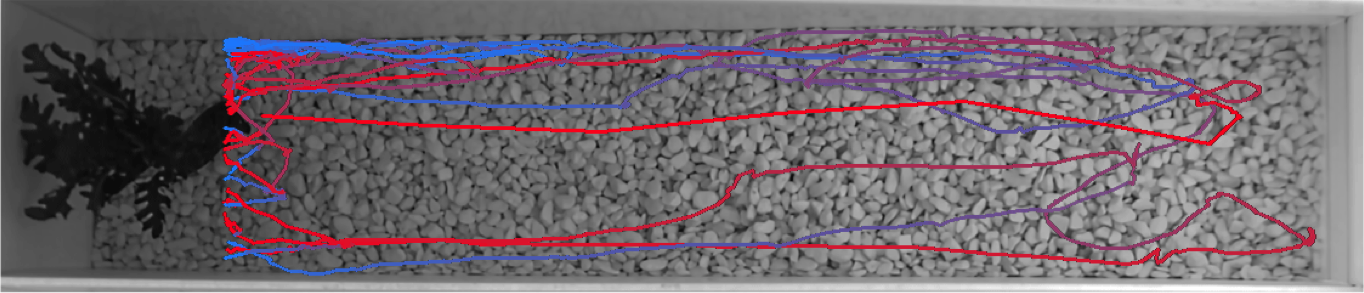
The positions and movements of the individual sticklebacks were recorded using sophisticated tracking technology, enabling accurate comparisons to be made of each fish’s role in the collective movement of the pair.
“We found that individuals differed considerably and consistently in their tendency to approach their partner,” said Jolles. The study showed that more sociable individuals tended to be coordinated in their behaviour while less sociable individuals were more inclined to lead.
Dr Andrea Manica, reader at the Department of Zoology and co-author of the paper, added: “Our research revealed that the tendency of fish to approach their partner was strongly linked to their boldness: bolder fish were less sociable than their more timid group mates.”
Jolles explains that sociability may form part of a broader behavioural syndrome. “Our results suggest that bolder, less sociable individuals may often lead simply because they are less reluctant to move away from their partners, whereas shyer, more sociable, individuals become followers because they prioritise staying close to others,” he said.

“Differences in boldness and sociability may be expressions of underlying risk-prone or risk-averse behavioural types, as risk-averse individuals may be more motivated to group together and to respond to other individuals in order to avoid predation.”
The findings of this study suggest that leadership and group coordination can be strongly affected by personality differences in the group and that boldness and sociability may play important but complementary roles in collective behaviour.
Jolles added: “Now we know these personality traits affect the collective movements of pairs of fish, the next step is to understand their role in the functioning and success of larger, more dynamic groups.”
See a 4min video in which we explain our paper in more detail below:
 Click here to download the paper.
Jolles JW, et al. (2015) The role of social attraction and its link with boldness in the collective movements of three-spined sticklebacks. Animal Behaviour, published online 2 Dec. Doi: 10.1016/j.anbehav.2014.11.004
-
Price for 2nd Best Graduate Poster, Cambridge
I won the second price for the best poster at the yearly Zoology Graduate Poster Competition at the University of Cambridge. You can see the poster on figshare. -

Guest lecture on Animal Tracking, Anglia Ruskin University, Cambridge
 Yesterday I gave a guest lecture on animal tracking as part of the masters course “Animal Behaviour, applications for conservation“, at Anglia Ruskin University Cambridge. During my one hour talk I discussed the positive and negative sides of animal tracking and showed how it plays a central role in my research on animal personality and collective behaviour.
 -
Talk at ISBE conference, New York
I gave a talk at the fantastic ISBE Conference in New York this year, entitled Effects of heterogeneity on collective behaviour. My presentation focused on the role of the boldness and sociability personality traits on the collective movements, coordination, and leadership in pairs and small groups of three-spined sticklebacks. A pdf of the talk can be found here (link removed).
-

Start of a new scientific youtube channel
I have recently started a youtube channel (here) to showcase my research projects and interests. As a scientist I believe it is important (and fun!) to engage with the public and make your work understandable to scientists and non-scientists alike. Not only because most science is ultimately payed by the tax payer, but also because one of the main goals of science is to learn more about our world and share this knowledge.
Next to publishing papers it is important to make these papers understandable so that this new knowledge can be appreciated and potentially be used by the general public. The aim with a new youtube channel is to show videos of different aspects of my experiments and projects but also of interesting aspects of social life of both human and non-human animals that reflect my research interests.
Today I would like to share a short video from a recent experiment that shows the successful tracking of five three-spined stickleback fish to investigate the role of animal personality on leadership and group movements.
By tracking the fish we can accurately (mm scale) determine each fish average position in the tank and calculate individual characteristics as well as social parameters for the group, such as group cohesion and leadership. In this particular situation fish 2 was the leader of the group.


